

The modern approach to oral health has shifted dramatically from reactive crisis management to proactive, highly personalized care planning. For decades, many individuals only visited a dental professional when a tooth fractured or pain became unbearable. Today, advanced diagnostics and a deeper understanding of the oral-systemic health connection empower individuals to treat oral care as a long-term investment in their overall physical well-being. Choosing the right path forward requires looking beyond surface aesthetics to understand the biological, structural, and preventive mechanics of your mouth.
Navigating the vast array of available dental treatments can feel overwhelming. From routine hygiene management to complex structural engineering and specialized surgeries, every choice you make impacts your bite mechanics, systemic inflammation levels, and long-term financial layout. This guide serves as an expert resource to help you evaluate clinical options, decipher complex treatment plans, and collaborate effectively with professionals to build an unshakeable foundation for your smile.
Navigating General Preventive Care and Establishing a Medical Home

The cornerstone of lifelong oral health is establishing a reliable, highly competent primary dental home. A high-quality general practice should act as the central coordinator for your entire care plan, diagnosing issues early and referring to trusted specialists only when a highly complex intervention is required. When seeking a primary care facility, looking past convenient geographic location to deeply analyze clinical philosophies, technology integration, and lifecycle versatility ensures your long-term needs will be met.
- Assess the diagnostic capabilities of modern dentists’ offices by verifying they utilize low-radiation digital radiography and intraoral cameras for precise tracking.
- Look for a clinical team that prioritizes comprehensive initial evaluations, including full periodontal charting and head-and-neck cancer screenings, over rushed, basic cleaning appointments.
- Streamline your household logistics by seeking a practice that specializes in family dentistry to allow pediatric, adult, and geriatric treatments to happen in one location.
- Evaluate the office’s continuing education focus, ensuring the practitioners are actively updated on the latest biocompatible materials and minimally invasive techniques.
Once a primary practice is selected, the first biological priority is securing the underlying health of your gum and bone tissue. The teeth are only as stable as the structural foundation supporting them. If plaque and hardened tartar are allowed to migrate beneath the gumline, they trigger chronic inflammatory responses that systematically destroy the periodontal ligament and surrounding jawbone. Identifying this degradation early dictates whether you receive standard maintenance or specialized therapy.
- Acknowledge that traditional coronal polishing is insufficient if pocket depths between your teeth and gums measure greater than four millimeters during charting.
- Utilize non-surgical, therapeutic deep cleanings consisting of meticulous scaling and root planing to remove subgingival bacterial biofilms and smooth root surfaces.
- Commit to a strict, localized post-therapy regimen, integrating antimicrobial rinses and specialized interdental brushes to allow hyperplastic gum tissues to heal and reattach.
- Maintain a strict three-to-four-month periodontal maintenance recall schedule to disrupt recurring bacterial colonies before they can calcify against root structures.
Evaluating Modern Alignment and Permanent Structural Replacements
Correcting crooked, crowded, or rotated teeth is a critical step in preserving long-term structural health. Misaligned arches create unnatural bite forces that lead to premature enamel wear, fractured cusps, and painful temporomandibular joint disorders. Furthermore, crowded teeth create tight, unmanageable spaces that act as breeding grounds for decay and periodontal disease, regardless of how meticulously you brush and floss.
- Understand that alignment therapies correct underlying skeletal and muscular biomechanics, preventing localized jaw stress and uneven muscle fatigue.
- Weigh the lifestyle advantages of modern clear braces, which offer the freedom to remove aligner trays during meals and simplify daily flossing routines.
- Commit to absolute compliance by wearing clear aligner trays for a minimum of twenty-two hours per day to ensure continuous, predictable cellular bone remodeling.
- Ensure that all orthodontic alignment sequences are preceded by comprehensive three-dimensional digital tracking to protect root systems from moving too quickly.
When a tooth is completely lost due to trauma, deep decay, or severe fracture, replacing it quickly is vital to preserving the rest of your mouth. Leaving an empty space in your dental arch causes adjacent teeth to drift out of position, destabilizing your entire bite. Furthermore, the jawbone requires the physical stimulation of tooth roots during chewing to maintain its density; without that stimulus, the surrounding bone quickly resorbs, changing your facial structure.
- Avoid the destructive alternative of grinding down healthy adjacent teeth to anchor a traditional three-unit bridge by opting for standalone restorations.
- Invest in surgically anchored dental implants to establish a permanent, biocompatible, titanium-based root replacement system that integrates natively into your jawbone.
- Understand the necessary multi-month timeline for osseointegration, allowing the titanium post to fully fuse with your living bone tissue before attaching a final crown.
- Maintain dental implant restorations with the same dedication as natural teeth, utilizing specialized non-abrasive instruments and custom flossing techniques to avoid localized tissue irritation.
Managing Complex Surgical Interventions and Third Molar Extractions

The management of third molars, commonly known as wisdom teeth, represents a major transitional phase in oral development. Because modern human jaws are frequently too small to accommodate these late-emerging molars, they often become impacted, stuck beneath the gumline, or trapped against adjacent teeth at unnatural angles. Leaving impacted molars unaddressed can lead to severe pain, localized cyst formation, and damage to the root structures of healthy second molars.
- Track the trajectory of third molars during late adolescence using panoramic or cone-beam computed tomography to identify impaction risks before roots fully mature.
- Recognize that proactive wisdom teeth removal prevents chronic pericoronitis, a painful infection of the gum tissue surrounding partially erupted teeth.
- Differentiate between simple, erupted extractions and complex, bony impactions that require specialized flap design and sectioning of the tooth structure.
- Evaluate your personal anxiety levels and surgical complexity to decide whether local anesthesia, nitrous oxide, or intravenous conscious sedation is appropriate.
The immediate post-operative phase following a major extraction dictates the long-term success of the surgical site. Proper healing relies entirely on the formation and preservation of a stable blood clot inside the empty socket. If this clot is dislodged or fails to form, the underlying bone and nerve endings are left completely exposed to air, food particles, and bacteria, resulting in a highly painful condition that halts recovery.
- Prepare for a smooth wisdom teeth extraction recovery by arranging for post-operative transit and stocking your kitchen with nutrient-dense, soft foods.
- Protect the healing site by strictly avoiding the use of straws, vigorous spitting, or smoking for at least seventy-two hours following surgery to keep the blood clot secure.
- Manage normal post-operative swelling and facial bruising by alternating cold compresses for twenty-minute intervals during the first twenty-four hours.
- Transition gradually to warm, moist heat applications after forty-eight hours to stimulate local cellular blood flow and relieve jaw joint stiffness.
Navigating Modern Endodontic Therapy and Structural Fortification
When dental decay or structural trauma bypasses the outer protective layers of enamel and dentin, it breaches the living center of the tooth: the dental pulp. Once bacteria infiltrate this sterile chamber containing nerves and blood vessels, the body triggers an intense inflammatory response, often causing acute, throbbing pain. Historically, a deeply infected pulp meant automatic tooth extraction. Modern endodontic advancements, however, allow clinicians to completely eradicate internal infections while preserving the physical tooth shell, saving your natural smile and protecting your surrounding jawbone from systemic abscesses.
- Acknowledge that a root canal procedure is a highly sophisticated microscopic cleaning therapy designed to save your natural tooth anatomy rather than a painful punishment.
- Utilize advanced digital apex locators and rotary titanium instrumentation to precisely clean, shape, and decontaminate complex, curved root canal systems.
- Seal the evacuated internal root chambers with biocompatible, hermetic filling materials like gutta-percha to permanently prevent future bacterial recolonization.
- Understand that an endodontically treated tooth becomes naturally brittle over time, requiring structural fortification via a custom-fabricated porcelain or zirconia crown to prevent future vertical fractures.
Deciphering Dental Materials and Biocompatible Restorations
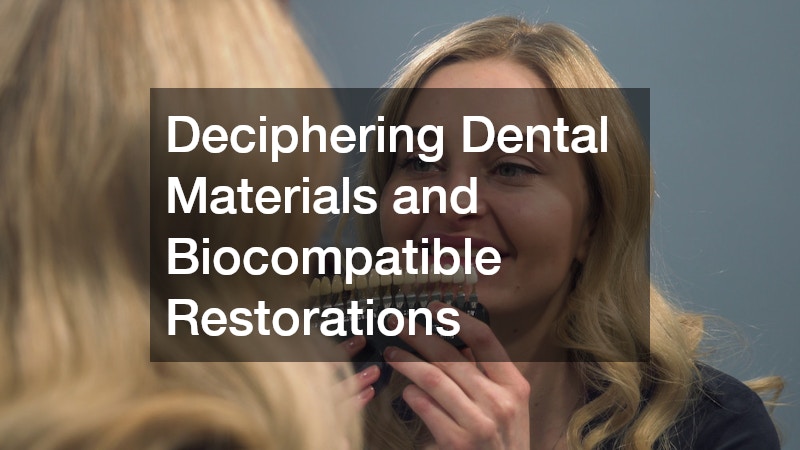
The materials used to rebuild damaged teeth have undergone a massive technological evolution. Amalgam restorations, while durable, are increasingly being replaced by modern, highly aesthetic materials that blend flawlessly with natural enamel. Choosing the right material for a restoration requires balancing structural demands, aesthetic expectations, and biocompatibility goals, ensuring that your filling or crown functions optimally without stressing your body’s immune system.
- Select premium, metal-free ceramic and composite resins for anterior restorations to mimic the natural translucency, light reflection, and opacity of healthy tooth enamel.
- Opt for ultra-high-strength monolithic zirconia for posterior crowns, which provides the exceptional durability required to withstand heavy, grinding molar forces.
- Incorporate conservative composite bonding techniques for minor fractures, allowing the clinician to preserve maximum healthy enamel while achieving immediate structural repairs.
- Verify that your restorative materials match your natural bite dynamics, ensuring the restoration wears down at a speed similar to your surrounding natural teeth.
Navigating Complex Aesthetics and Interdisciplinary Care Boundaries
Once structural stability, alignment, and tissue health have been fully secured, you can explore elective aesthetic enhancements. Aesthetic dentistry should never be performed on a foundation of unaddressed decay or active gum disease. When properly sequenced, cosmetic procedures can dramatically alter tooth proportions, repair surface blemishes, and brighten your overall smile, drastically boosting your daily confidence.
- Differentiate between temporary chemical whitening and permanent structural alterations like porcelain veneers or direct composite bonding.
- Select a cosmetic dental procedure that preserves as much natural enamel structure as possible, choosing conservative treatments whenever clinically feasible.
- Insist on diagnostic wax-ups or digital smile previews before altering teeth to ensure your final aesthetic goals match your natural facial symmetry.
- Understand that modern aesthetic materials, while highly advanced, still require regular maintenance and will eventually need replacement over a long lifetime.
In cases involving severe facial trauma, congenital jaw discrepancies, or complex full-face reconfigurations, care must expand past standard dental boundaries. True full-mouth rehabilitation often requires an interdisciplinary approach that blends dental science with broader facial plastic and reconstructive surgery. Coordinating these advanced fields ensures that your new smile integrates perfectly with your broader facial features and jaw mechanics.
- Consult with highly trained cosmetic surgeons when addressing skeletal jaw misalignments that cannot be fixed by standard orthodontics alone.
- Ensure open lines of communication between your restorative dentist and your surgical team to coordinate proper tooth positions with skeletal adjustments.
- Address soft-tissue facial aesthetics holistically, ensuring lips, chin projection, and smile lines are balanced to create a natural appearance.
- Understand that complex interdisciplinary treatment plans may require multi-year timelines and staged healing intervals to achieve stable, lifelike results.
Structuring Early Childhood Development and Pediatric Dental Baselines
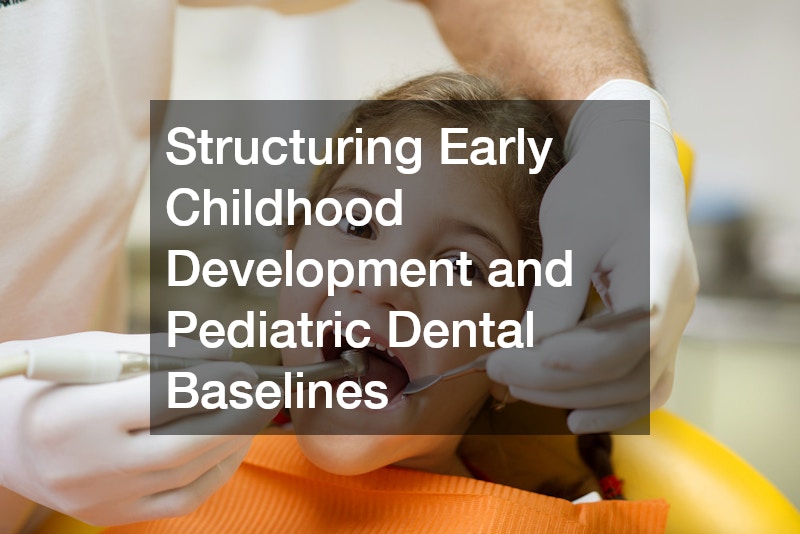
The foundation for a lifetime of exceptional oral health is laid during the earliest stages of childhood. Primary teeth, though temporary, serve critical roles in speech development, proper nutritional intake, and guiding permanent teeth into their correct positions. Introducing positive dental experiences early helps eliminate dental anxiety and establishes healthy habits that persist long into adulthood.
- Schedule a child’s introductory dental visit within six months of the eruption of their first primary tooth, or no later than their first birthday.
- Collaborate directly with your primary pediatrician to track early developmental milestones, nutritional habits, and overall skeletal jaw symmetry.
- Manage oral pacifier dependencies and prolonged thumb-sucking habits before age three to prevent permanent distortion of the developing upper palate.
- Clean an infant’s gums daily with a soft, damp cloth after feedings to remove residual sugars and prepare the oral environment for primary tooth eruption.
As children transition from primary to permanent dentition, their newly erupted adult molars are highly vulnerable to decay. The deep pits and fissures on the chewing surfaces of these teeth easily trap food particles and bacteria that toothbrush bristles cannot reach. Implementing painless, non-invasive preventive barriers during these highly formative years provides a shield against childhood cavities.
- Apply protective plastic sealants to the deep grooves of permanent first and second molars as soon as they fully emerge from the gum tissue.
- Monitor early arch development closely to identify severe crossbites or crowding issues that benefit from early, interceptive orthopedic appliance therapy.
- Enforce a strict, twice-daily brushing routine using age-appropriate fluoridated toothpaste under adult supervision until the child develops adult-level manual dexterity.
- Utilize custom-fabricated athletic mouthguards during youth sports to protect developing teeth and jaw joints from sudden impact trauma.
Conclusion
Choosing the best treatments for your teeth is an ongoing, lifelong process that requires a careful balance of consistent prevention, timely intervention, and open communication with a trusted professional team. By focusing heavily on establishing a comprehensive dental home, prioritizing periodontal health, and making informed choices regarding alignment and structural replacement, you protect your mouth from premature wear and systemic complications. Whether managing common childhood milestones, navigating complex third molar extractions, or exploring custom aesthetic upgrades, every decision should be guided by a dedication to long-term tissue preservation and biological harmony. When you view oral health as an essential component of your systemic physical wellness, your investments stop being stressful expenses and become a powerful tool for a healthy, confident life.